
Writing a research paper with influence and impact
Lessons from IOP Publishing’s India Top Cited Authors
Influential papers usually succeed because they land in the right place at the right time. For researchers early in their careers, understanding this “sweet spot” can help you shape work that others will notice and use.
Below you can read interviews from a selection of Top Cited Paper authors, who discuss their breakthroughs.
From discussing successes and failures they conclude these key themes:
- Impactful papers hit the intersection of importance, timing, and usability. They address problems many researchers are already grappling with.
- Usefulness drives citations. Work becomes cited when others can apply it directly to their own research.
- Reusability is a major factor. Papers offering methods, algorithms, datasets, benchmarks, taxonomies, or frameworks are cited repeatedly because they can be reused or compared against.
- Timing matters. Influential papers often appear just as a field expands or a new direction emerges, especially when the contribution is clearly articulated.
- Clarity boosts appeal and reuse. Papers with clear contributions, intuitive structure, strong visuals, and precise definitions are easier to understand and therefore easier to cite.
- Strong, defensible claims help. Highly cited papers often take clear positions, test them rigorously, and anticipate objections.
- Cross-community relevance expands multidisciplinary appeal and visibility. Work that bridges multiple research communities (theoretical + applied, or across disciplines) naturally gains visibility.
- Visibility increases discoverability. Clear titles/abstracts, preprints, presentations, code or data releases, and informal explanations (talks, blogs) help the right people find the work.
- Some papers become default references. They serve as shared orientation points for a field, accumulating citations almost automatically over time.

India’s Top Cited Paper awards
To discover the full list of India’s Top Cited Paper awards, click here
Meet the researchers sharing some of their research breakthroughs

Professor Sarika Jalan
‘Hebbian plasticity rules abrupt desynchronization in pure simplicial complexes’ published in New Journal of Physics
Professor Sarika Jalan and team were, to their knowledge, the first to apply Hebbian plasticity inspired learning mechanisms to higher‑order interactions, demonstrating how these interactions stabilise synchronisation against perturbations. The novelty of this approach sparked citations across complex‑system physics.
Dr Mukesh Kumar
‘A strategic review of recent progress, prospects and challenges of MoS₂-based photodetectors’ published in Journal of Physics D: Applied Physics
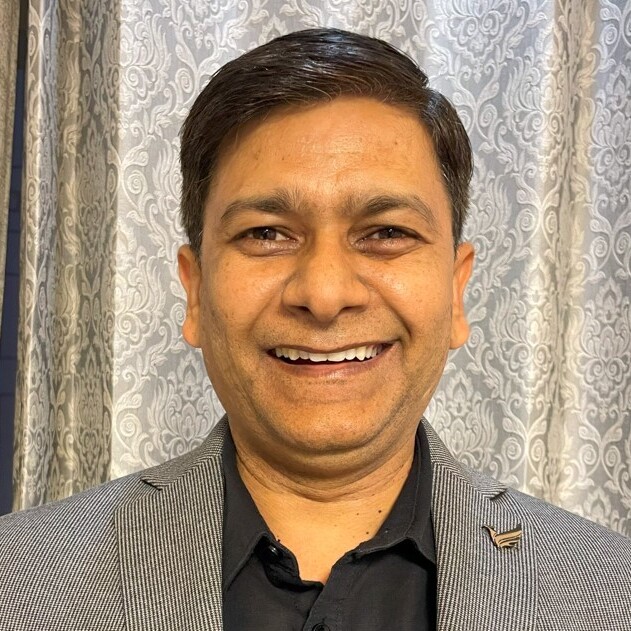
Dr Mukesh Kumar explains that their review of MoS₂‑based photodetectors gained traction because it summarised an emerging area of TMDC materials. This topic is a growing global interest with interdisciplinary and applied research areas.
Dr Prashant Singh and Dr Arnab Pal
‘First-passage Brownian functionals with stochastic resetting’ published in Journal of Physics A: Mathematical and Theoretical
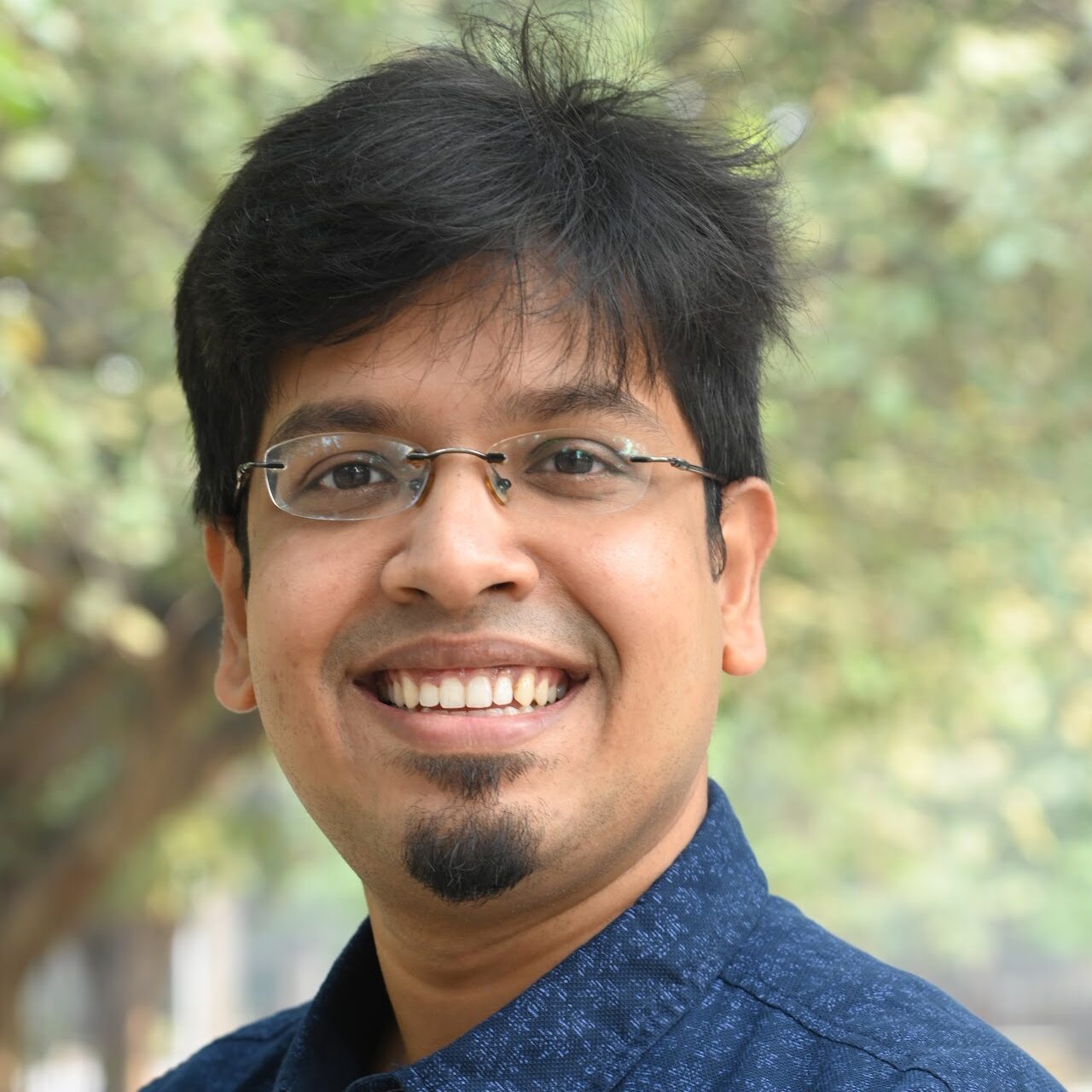
Prashant Singh and Arnab Pal’s research paper bridges theory and application, and gives the statistical physics community concrete tools and frameworks to build upon. The research is contributing meaningfully to ongoing work in the field. Arnab Pal says that this articles success is a reminder that fundamental ideas—like stochastic resetting—can spark broad interest and open rich avenues for both theoretical development and practical application.
Professor Parasuraman Swaminathan
‘A review of silver nanowire-based composites for flexible electronic applications’ published in Flexible and Printed Electronics
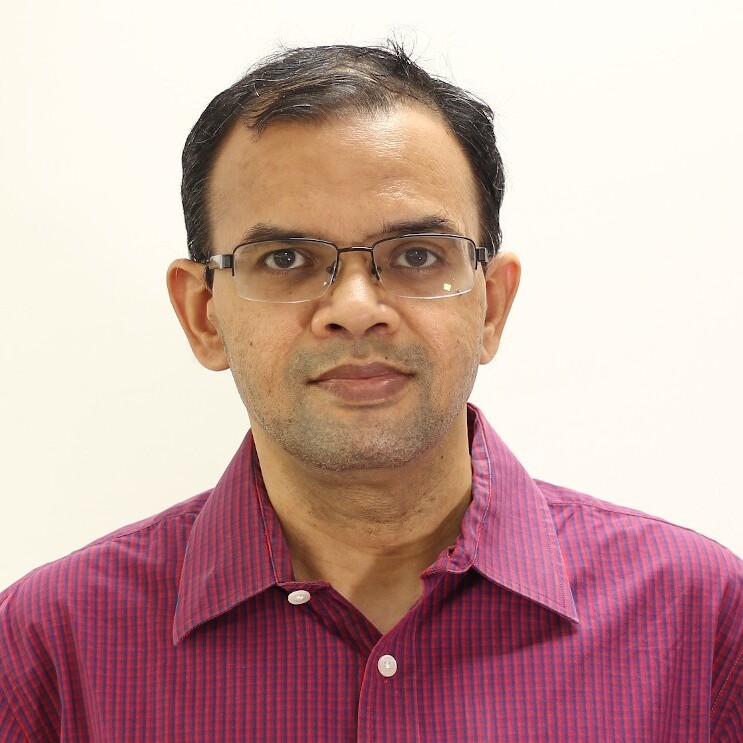
Professor Parasuraman Swaminathan’s discusses their comprehensive review as recognition of the importance of silver nanowires, which have become a ubiquitous part of flexible electronic devices. This topic and technology is gaining traction in diverse fields with a prominent transition towards commercialisation and its availability in the market place.
Dr Shikhar Mittal
‘Constraining primordial black holes as dark matter using the global 21-cm signal with X-ray heating and excess radio background’ published in Journal of Cosmology and Astroparticle Physics
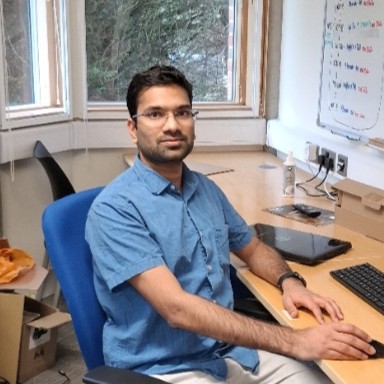
Shikhar Mittal explains that their research addresses a timely and fundamental question on Primoridal Black holes and Dark Matter, both of which have been a key topic of attention by particle physicists and cosmologists for many years. Using a novel observational avenue, they provide results that are directly useful for others working in these fields.
Professor Sandip Mondal
‘Quantum dots: an overview of synthesis, properties, and applications’ published in Materials Research Express
Sandip Mondal’s team reviewed research on quantum dots which are at the intersection of materials science, nanotechnology, and device engineering. Their paper is both technically detailed and broadly accessible with an interdisciplinary appeal making it highly usable for a wide audience across fields.
Dr P. Veeresha
‘An efficient technique to analyze the fractional model of vector-borne diseases’ published in Physica Scripta
P. Veeresha’s team’s paper focused on a practical approach to study vector-borne diseases using fractional models. Linking their research to real-world problems. An approach which makes it easier for others to apply.