JPhys series
Built on trusted content.
Growing through innovation.
Publish with the JPhys series and join a global community shaped by a professional peer review approach and expertise in and commitment to research integrity and publishing ethics.
The JPhys series is built on decades of trust and excellence. More than a collection of journals, it is a purpose-led network that connects disciplines and supports collaboration. Each journal is part of something bigger, linking editorial pathways and cross-journal partnerships that broaden reach and impact across the research landscape.
Join global leaders and rising researchers to explore cutting-edge research across disciplines and gain insights that will shape the future of science and technology.
Growing through innovation
New journals, inventive article types and coverage of emerging topics create opportunities that shape the future
Built on trusted content
A reliable home for quality science, underpinned by a team of specialists, a professional peer review approach, COPE membership and rigorous ethics standards
Connected by purpose
Not for profit, society-led publishing that brings ideas and people together through cross‑journal collaboration
JPhys series
Journal of Physics A: Mathematical and Theoretical
Editor-in-Chief:
Satya Majumdar
(Université Paris-Saclay, France)

Journal of Physics B:
Atomic, Molecular and Optical Physics
Editor-in-Chief:
Marc Vrakking
(Max Born Institute for Nonlinear Optics and Short Pulse Spectroscopy, Berlin, Germany)
Journal of Physics: Condensed Matter
Editor-in-Chief:
Peter A Dowben
(University of Nebraska at Lincoln, USA)

Journal of Physics D: Applied Physics
Editor-in-Chief:
Sabina Spiga
(CNR Institute for Microelectronics and Microsystems, Italy)

Journal of Physics G: Nuclear and Particle Physics
Editor-in-Chief:
Stefano Forte
(Milan University, Italy)
Journal of Physics: Complexity
Editor-in-Chief:
Ginestra Bianconi
(Queen Mary University of London, UK)
JPhys history
A Legacy of Excellence. A Network for Discovery.
Every journal is guided by a dedicated professional team of highly trained experts. Their hands-on involvement creates a robust, coherent and supportive peer review experience, founded on deep expertise, careful oversight, and an unwavering commitment to quality and integrity.
Tracing its roots to the Proceedings of the Physical Society of London (1874), the JPhys series combines the authority of established journals with the energy of innovation. Longstanding titles bring respected expertise and reputation, while newer journals and publishing formats create opportunities for emerging fields and pioneering research.
When you publish with the JPhys series, you're not simply sharing your research—you’re joining a global community and contributing to a legacy that continues to shape and advance science worldwide.
Hear from Editorial Board Members
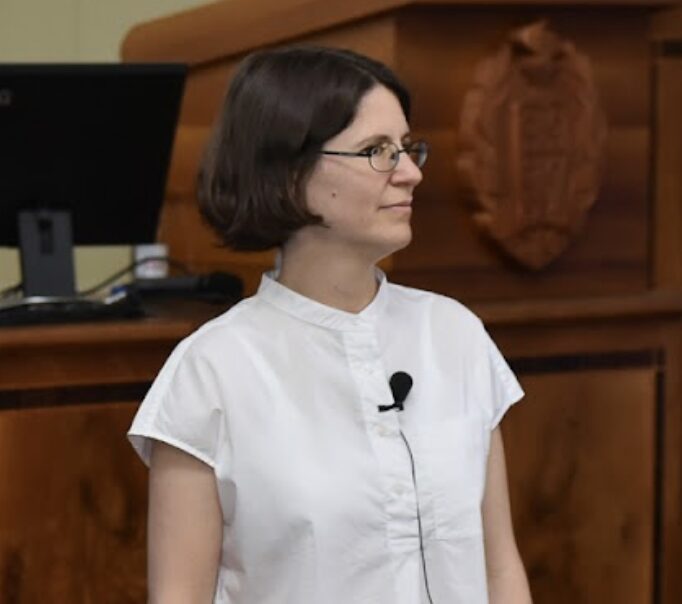
“I’m proud to have published in Journal of Physics B methodological developments in ion and electron scattering from molecules, the first ab initio cross sections for low energy inelastic electron scattering from a biologically relevant molecule and, more recently, a topical review on electron scattering from molecules and molecular aggregates of biological relevance. I support JPhys B, both as an author and a member of its Editorial Board, because it not only cares about the quality of what it publishes but also about making papers useful to the atomic, molecular and optical physics community".
Jimena Gorfinkiel
The Open University, UK

“I published my very first paper in Journal of Physics A. I remember it very well indeed. I recall that I received a very detailed report which was extremely useful to make the paper more accessible. A few years later I was browsing the paper copy of the special issue (which I still have) and realised that on the same special issue, alongside my contribution, are some of the most consequential papers at that time in my area and my career.”
Ines Aniceto
University of Southampton

"I wrote my first review paper for the Journal of Physics: Condensed Matter and, while I found putting this together to be hard going at the time, it made me discover a lot of useful literature and later turned out to be extremely useful as an experience in all later writing projects."
Peter Sollich
Universität Göttingen, Germany