A Century of Excellence at Tsinghua University – Shaping the Future of Scientific Discovery with IOP Publishing
For 100 years, the Department of Physics at Tsinghua University has been a driving force in shaping modern science in China and beyond. Since its founding in 1926 under pioneering physicist Professor Yeh Chi-Sun (叶企孙), the department has grown into a world-class centre of research and education, powered by generations of exceptional faculty, researchers, and students.
As Tsinghua enters its second century, it is deepening its global impact through a new strategic partnership with IOP Publishing—expanding international collaboration, accelerating scientific discovery, and continuing its legacy of excellence in physics.
History of Tsinghua
Early Years (1926-1937)
The Department of Physics at Tsinghua University was established in 1926 as one of the university’s first academic departments following its transition from Tsinghua School to a full university. Led by its inaugural chair, Yeh Chi‑Sun (叶企孙), a pioneering figure and one of the founding fathers of modern physics in China, the department quickly developed into a leading centre for research and education. Yeh recruited an exceptional faculty, many trained abroad, including Mei Yi-qi (梅贻琦), Woo Yu-Hsun (吴有训), Sa Bendong (萨本栋), Zhou Peiyuan (周培源), Chao Chung-Yao (赵忠尧), and Jen Chih-Kung (任之恭). Inspired by American and European universities, the curriculum emphasized strong foundations in classical and modern physics. By the 1930s, the department had established advanced laboratories in X‑ray physics, radio science, optics, and magnetism. Faculty published influential papers in journals such as Nature, and hosted major scientific figures including Niels Bohr and Paul Dirac. The department also helped organize the inaugural meeting of the Chinese Physical Society in 1932 and educated students who later became leaders in Chinese science, including multiple Two Bombs and One Satellite Merit Award recipients.
The National Southwestern Associated University Period (1938-1946)
After the outbreak of the War of Resistance Against Japanese Aggression in 1937, Tsinghua relocated with Peking University and Nankai University, first to Changsha and then to Kunming, forming the National Southwestern Associated University (Lianda). Despite severe wartime shortages, the Lianda Physics Department, drawing elite faculty from all three institutions, including Yeh Chi-Sun, Woo Yu-Hsun, Zhou Peiyuan, Chung-Yao Chao, Jwu-shi Wang (王竹溪), Jen Chih-Kung, Rao Yu-Tai (饶毓泰), Wu Ta-You (吴大猷), and Zhang Wenyu (张文裕), sustained high‑quality teaching and theoretical research. Although laboratory resources were limited, the department continued significant scientific work and contributed to the war effort through specialized research institutes led by physics faculty. Lianda also attracted top students nationwide, producing future Nobel laureates Yang Chen-Ning (杨振宁) and Lee Tsung-Dao (李政道), as well as Two Bombs and One Satellite Merit Award recipients Deng Jiaxian (邓稼先), Zhu Guangya (朱光亚), and Kuo Yung-Huai (郭永怀).
Post-War Recovery and the 1952 Restructuring (1946-1952)
After the war, Tsinghua returned to Beijing in 1946. Led by Yeh Chi-Sun, the physics department worked tirelessly to rebuild its facilities, which had been severely damaged, and soon regained its pre-war stature. It attracted prominent physicists like Qian Sanqiang (钱三强) and Peng Huanwu (彭桓武). However, in the nationwide “Adjustment of Colleges and Departments” in 1952, aiming to emulate the Soviet model, Tsinghua was transformed into a polytechnic university of engineering. Its Physics Department was merged into the Peking University Physics Department. This severed Tsinghua’s long-standing tradition in physics education and research.
Physics at Tsinghua After the Restructuring (1952-1982)
For the next three decades, Tsinghua had no physics department. Physics-related activities were confined to the Physics Teaching and Research Group (focusing on teaching foundational physics to engineering students) and the newly established Department of Engineering Physics (1956), which included some physics-related specialties like theoretical physics and nuclear physics. While marginalized, basic physics research and education persisted against the odds. Some faculty continued research, and the Engineering Physics Department contributed significantly to China’s atomic energy programme. In the 1970s, influenced by Zhou Enlai’s directives following Yang Chen-Ning’s suggestions, Tsinghua established several research programmes in areas like solid-state physics, nurturing talent for the future revival of science at Tsinghua.
Reestablishment and Revival (1982-Present)
The Department of Physics at Tsinghua University was re-established on 24 June 1982 thanks to the efforts of alumni such as Jen Chih‑Kung and Huang Wei (黄葳), drawing on the former Physics Teaching and Research Group and parts of the Engineering Physics Department. Zhang Li became its first chair. The department was initially renamed the Department of Modern Applied Physics after merging with an accelerator physics group in 1984, before reverting to its original name in 1999. Throughout the late 20th century, the department rebuilt its strength by recruiting leading physicists, reforming management, enhancing undergraduate teaching, and expanding research. Key milestones included the establishment of the Institute for Advanced Study in 1997 and the Center for Astrophysics in 2001, which later became the Department of Astronomy in 2019. Under successive chairs, the department has steadily risen to become a top‑tier physics institution in China with significant international impact.
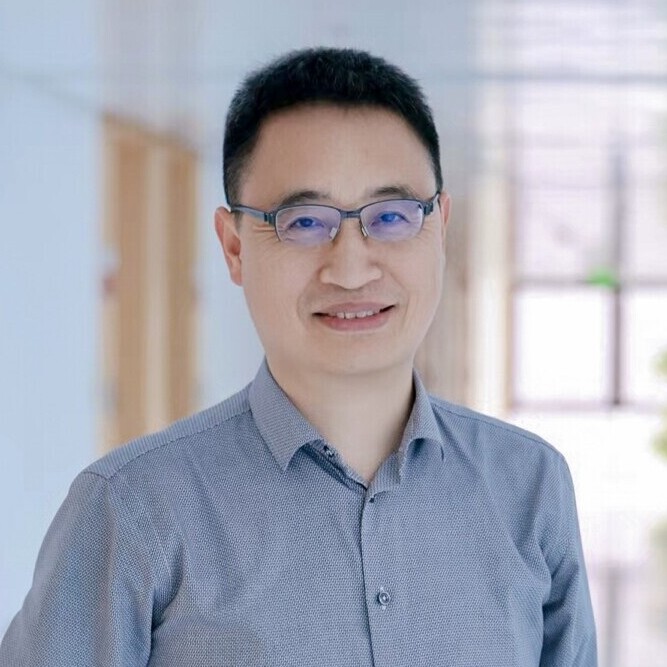
Professor Wenhui Duan
“As we embark on our next century, we are proud to announce a strategic partnership with IOP Publishing. Together, we aim to foster global dialogue, accelerate innovation, and define the future of physics on the world stage.”
Why artificial intelligence will be an important factor for physics in the coming decades.
Wenhui Duan, head of physics at Tsinghua University recently met with Michael Banks of Physics World to discuss the upcoming celebration of 100 years of physics at Tsinghua University. They discussed the importance of AI, global collaboration and the future of Tsinghua in this important research area.
Focus on Perspectives on the Future of Variational Quantum Computing
Discover our focus collection from Quantum Science and Technology showcasing influential advances across quantum communication, sensing, computation, and more. Explore breakthrough research selected for its lasting impact and high scientific standards—and click through to dive deeper into the innovations shaping the future of quantum science.
Guest Editors
Marco Cerezo, Los Alamos National Laboratory, USA
Zoë Holmes, École Polytechnique Fédérale de Lausanne, Switzerland
Focus on 100 years of publishing excellence at Tsinghua University
To celebrate the centennial of the Department of Physics at Tsinghua University, we are pleased to launch a dedicated Focus Collection across four leading journals. This collaboration aims to showcase the breadth and depth of contemporary physics research, highlighting both fundamental advances and emerging frontiers. We invite submissions that reflect the vibrant research activities across the core areas of Tsinghua Physics and Journal of Physics: Condensed Matter,Journal of Physics A: Mathematical and Theoretical,Journal of Physics B: Atomic, Molecular and Optical Physics and Journal of Physics G: Nuclear and Particle Physics.
Tsinghua Physics achievements
4th
Largest producer of physics research in the world
3rd
Largest producer of physics research in China
17,500+
Published articles since 2016
2nd
Most cited institute for physics research in China. 10th worldwide
550,000+
Citations of physics research since 2016
Progress in Quantum Machine Learning
10 May 2026
Progress in Quantum Machine Learning is a one-day international workshop bringing together leading researchers from the international community to share, learn, and collaborate on the latest cutting-edge research on quantum machine learning, including quantum matter and computing, new materials discovery, high-energy particle physics, drug design and quantum chemistry, and quantum algorithms and software development. Held as part of Tsinghua University’s Department of Physics 100th anniversary and in partnership with Reports on Progress in Physics, it marks a rare convergence of global expertise and cutting‑edge ideas.
Venue:
Tsinghua University, Beijing, China and online
Chair:
Professor Wenhui Duan, Tsinghua University, China
Committee members:
Professor Di Luo, Tsinghua University, China
Dr David Gevaux, Chief Editor, Reports on Progress in Physics, UK
Plenary speakers:
Professor Mauro Paternostro, Queen’s University Belfast, UK
Wolfagang Mauerer, Technical University of Applied Science Regensburg, Germany
Alexey Melnikov, Terra Quantum AG, Switzerland
2026 IOP China Scientific Advisory Board Meeting
Since 2019, the IOP Publishing (IOPP) China Scientific Advisory Board (SAB) programme has been held annually in China. The SAB is chaired by Professor Qikun Xue, President of the Southern University of Science and Technology and Vice President of the Chinese Physical Society (CPS), and comprises more than 20 leading Chinese scientists from top universities across the country.
2026 marks the 100th anniversary of the Department of Physics at Tsinghua University, one of China’s most historic and influential centres of scientific excellence. In alignment with this milestone celebration, the annual meeting will be hosted at Tsinghua University.